
How to Reconstitute Peptides
A step-by-step, interactive walkthrough of turning a freeze-dried vial into a measurable solution, with two fully worked examples.
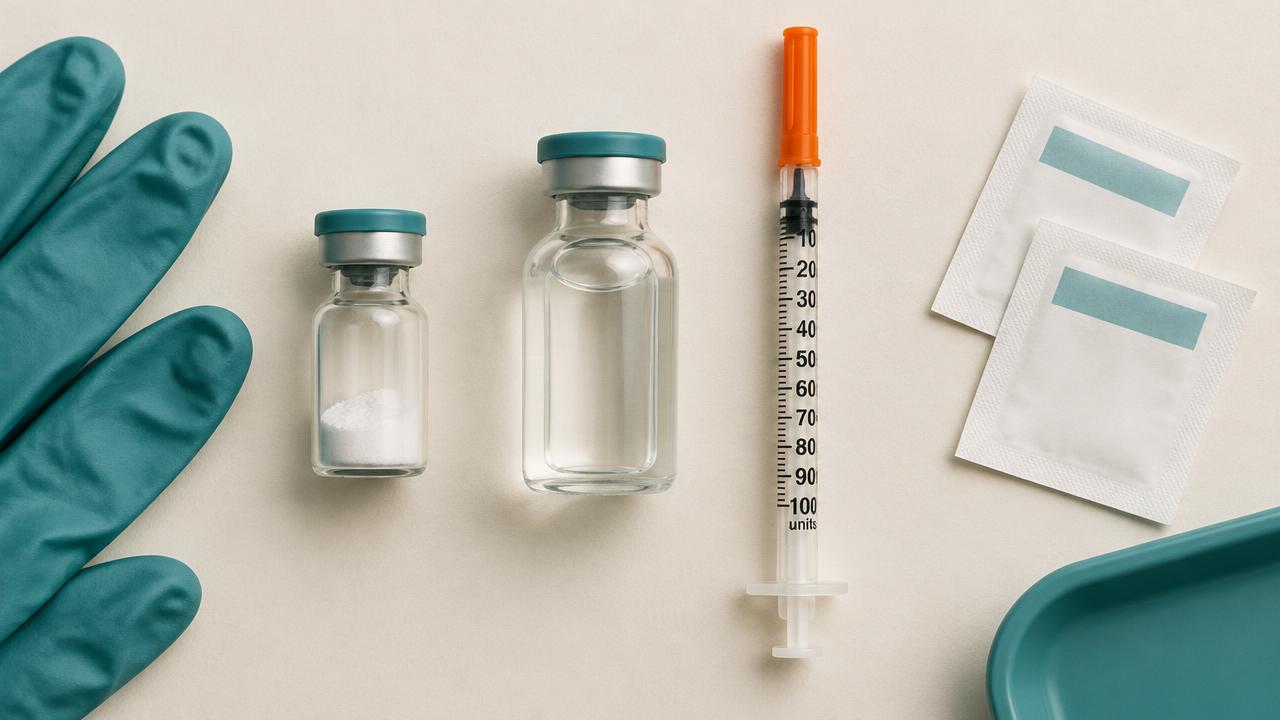
Pick a vial size
- Step 1Concentration20 mg ÷ 2 mL= 10 mg/mL
- Step 2Volume for 1 mg1 mg ÷ 10 mg/mL= 0.1 mL
- Step 3Syringe units0.1 mL × 100= 10 units
- Step 4Aliquots per vial20 mg ÷ 1 mg= 20
The 20 mg vial is twice as concentrated, so the same 1 mg sits in half the volume: 10 units. Small volumes are harder to measure precisely; some procedures add more water to make marks easier to read.
| Vial | Water | Concentration | 1 mg = | Units | Aliquots |
|---|---|---|---|---|---|
| 20 mg | 2 mL | 10 mg/mL | 0.1 mL | 10 | 20 |
| 10 mg | 2 mL | 5 mg/mL | 0.2 mL | 20 | 10 |
Five steps, one at a time
1. Prepare
Let both vials reach room temperature. Wash hands, then wipe each rubber stopper with a fresh alcohol pad and let it air dry.
Storage notes commonly cited
- Unmixed powder: cool, dry, away from light; refrigerate or freeze for longer storage.
- Once reconstituted: refrigerate (2–8 °C) and keep from light.
- Discard if cloudy, discoloured or containing particles.
- Use a fresh sterile needle every time the stopper is pierced.
Try your own numbers
Use the calculator for any vial size, water volume or target amount, in mg or mcg.
Open the calculatorThis guide explains arithmetic and general laboratory handling for educational purposes. The 1 mg figure is an example for the maths only, not a recommended amount for any person. It is not medical advice; many of these compounds are not approved for human use.